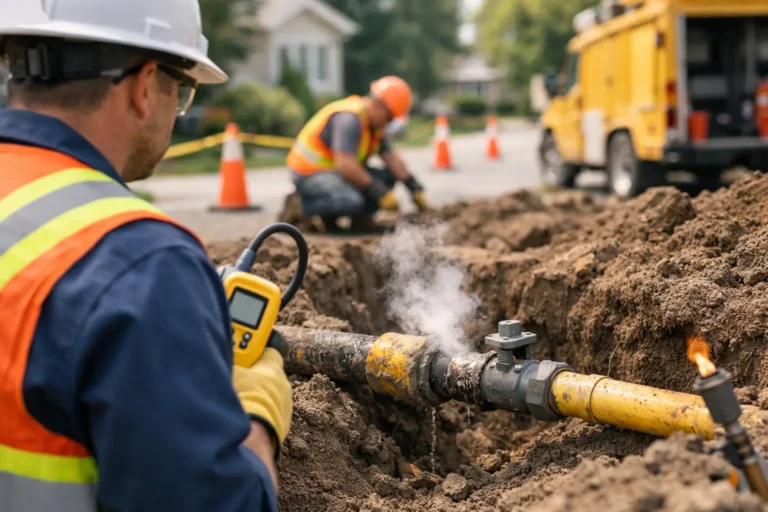
When the morning shower turns cold because someone started the dishwasher, the limits of a conventional tank become obvious. Tankless water heaters provide hot water as it is needed, rather than storing a fixed supply in a large tank. For many Ontario homes and properties, that can mean more dependable comfort, reduced standby energy loss, and valuable floor space back in the utility room.
That does not mean a tankless unit is automatically the right replacement for every property. The best choice depends on household demand, fuel availability, plumbing layout, venting, electrical requirements, and the condition of the existing gas system. A properly selected and professionally installed unit can perform exceptionally well. An undersized or incorrectly installed unit can create frustration from the first cold day onward.
How Tankless Water Heaters Work
A conventional water heater heats and stores a tank of water, cycling on and off to maintain its set temperature. A tankless model has no storage tank. When a hot-water fixture opens, water flows through the unit and a heat exchanger warms it on demand. When the fixture closes, the heating process stops.
The practical benefit is continuous hot water within the unit’s rated capacity. You are not waiting for a depleted tank to recover before the next shower. However, continuous does not mean unlimited under every condition. A unit must be sized to heat the amount of water your household needs at the time it needs it.
For example, a shower, washing machine, kitchen tap, and dishwasher may all call for hot water at once. In winter, incoming municipal water is colder, so the heater needs more energy to raise it to the desired temperature. This is why a unit that seems adequate on paper can struggle if it was selected without considering local seasonal conditions and real household habits.
When a Tankless System Makes Sense
Tankless water heaters are often a strong fit for households that regularly run out of hot water, homes where space is limited, and properties planning a long-term equipment upgrade. Because there is no large tank, a wall-mounted unit can free up room in a basement, utility closet, or mechanical area.
They can also reduce energy waste. A storage tank loses heat through its walls over time, even when nobody is using hot water. Tankless equipment only heats water during a call for hot water. The savings vary based on usage, fuel costs, equipment efficiency, and the condition of the old system, so it is better to view energy savings as a potential benefit rather than a guaranteed dollar amount.
For rental properties and small commercial spaces, a properly sized tankless system can help support reliable service where occupants use hot water at different times of day. The installation still needs to account for peak demand. A property with several bathrooms may need a higher-capacity unit, strategic fixture management, or more than one unit.
The Trade-Offs to Consider Before Replacing Your Tank
Upfront cost is usually the first consideration. Tankless equipment and installation can cost more than a straightforward tank replacement. The difference is often tied to venting changes, condensate drainage, gas-line upgrades, electrical work, and the labour required to bring the installation up to current safety standards.
Gas capacity is particularly important. Many high-output gas tankless units require a larger gas supply than an older tank-style water heater. If the existing gas line cannot supply enough fuel while the furnace, fireplace, range, or other appliances are operating, the line may need to be modified. This is not a place to cut corners. Gas work should be completed by licensed professionals who can confirm safe capacity, proper connections, and code-compliant operation.
Tankless systems also have a small learning curve. There can be a brief delay before hot water reaches a fixture, especially in a larger home with long plumbing runs. That delay is usually caused by the distance water must travel through the pipes, not by the heater itself. Recirculation options may help in some layouts, but they add cost and should be evaluated based on the property’s actual needs.
Sizing Tankless Water Heaters Correctly
The most common mistake with tankless water heaters is choosing a unit based only on the number of bathrooms. Bathroom count matters, but it does not tell the whole story. Proper sizing considers the number of fixtures likely to run at the same time and the temperature rise required.
A technician will look at the expected flow rates of showers, faucets, appliances, and tubs. They will also consider whether the system must serve a busy family morning, a multi-unit property, staff washrooms, or occasional low-demand use. The objective is to identify realistic peak demand rather than design around the rare moment when every fixture is running.
Homes in Burlington and across the surrounding area also need a unit that performs during cold-weather incoming-water conditions. A heater’s advertised flow rate may be measured under warmer conditions than an Ontario winter provides. Selecting capacity with that temperature difference in mind helps avoid reduced flow or lukewarm water when demand is highest.
One Unit or Multiple Units?
A single high-capacity unit is suitable for many homes. Larger homes, properties with a distant ensuite, or commercial spaces with separate areas may benefit from multiple units or point-of-use equipment. This can improve delivery and reduce the need for hot water to travel long distances through the building.
There is no one-size-fits-all answer. More equipment means more installation cost and future maintenance, but it may offer better performance and redundancy in the right application.
Installation Is a Safety and Performance Issue
A tankless water heater is not simply hung on a wall and connected to existing pipes. The installation may involve gas piping, combustion air, venting, water lines, condensate management, electrical connections, and drainage. Each part affects safety, efficiency, and manufacturer warranty requirements.
High-efficiency condensing units produce condensate that must be drained correctly. Vent materials and routing must match the equipment specifications. Outdoor installations may be possible in some cases, but exposure, freeze protection, service access, and local conditions need careful review. Indoor installations must provide safe venting and accessible clearance for future maintenance.
If you smell gas, hear unusual sounds from a gas appliance, see water leaking around equipment, or lose hot water suddenly, do not attempt a repair yourself. Turn off the water or gas supply only if it is safe to do so, keep ignition sources away, and arrange qualified service promptly. A fast diagnosis can prevent a minor issue from becoming a safety concern or a larger property repair.
Maintenance Protects Efficiency and Equipment Life
Tankless units are often described as low-maintenance, but they are not maintenance-free. Mineral deposits can build up inside the heat exchanger, particularly in areas with hard water. Over time, scale can reduce heat transfer, affect flow, and make the unit work harder.
Annual service is a practical way to protect performance. A qualified technician can flush the heat exchanger when needed, inspect burners and venting, check the condensate system, test operation, clean filters, and look for early signs of wear. Maintenance is also a good opportunity to confirm that settings still suit the property’s needs.
Water quality, usage levels, and equipment type influence the maintenance schedule. A household with high hot-water demand or hard water may require more frequent attention than a lightly used unit. Following the manufacturer’s requirements helps preserve efficiency and supports warranty compliance.
Choosing Between Tank and Tankless
A conventional tank remains a sensible option for some properties. It often has a lower initial installation cost, works well for predictable demand, and can be a straightforward replacement when budget or installation constraints are the priority. It may be the practical answer for a property that will be sold soon or does not have the gas, venting, or electrical conditions required for a tankless upgrade.
Tankless equipment is worth serious consideration when you want longer-term efficiency, continuous hot water within rated capacity, and a smaller equipment footprint. The right decision is based on the full installation, not just the price of the appliance. A clear assessment of your demand, existing utilities, and property layout will show whether the investment fits.
If your current water heater is leaking, unreliable, or no longer meeting demand, arrange a professional assessment before it fails completely. AirTemp HVAC can evaluate the equipment, gas requirements, venting, and installation options so you can choose a safe, properly sized solution with confidence.